
Identify a Mitchell County Owner
An address is the usual starting point. The Mitchell County assessor search takes a street address, parcel ID, or owner name. Match the situs, acreage, and parcel number to narrow the candidate.
- Search the street number and core street name, omitting direction and street type if needed.
- Copy the parcel ID, owner field, situs, acreage, and legal description from the likely result.
- Find the newest matching deed in GSCCCA and compare the grantee and land description.
- Check an entity name in Georgia business records, then stop if the parcel evidence does not match.
Mitchell Address Search Tactics
The assessor recommends partial searches. Try the last name alone, shorten the stem, and leave out the comma. A Camilla, Pelham, or Baconton mailing label does not settle city limits, so match the parcel details instead of the mailing city.
The official search interface shows all three starting keys.
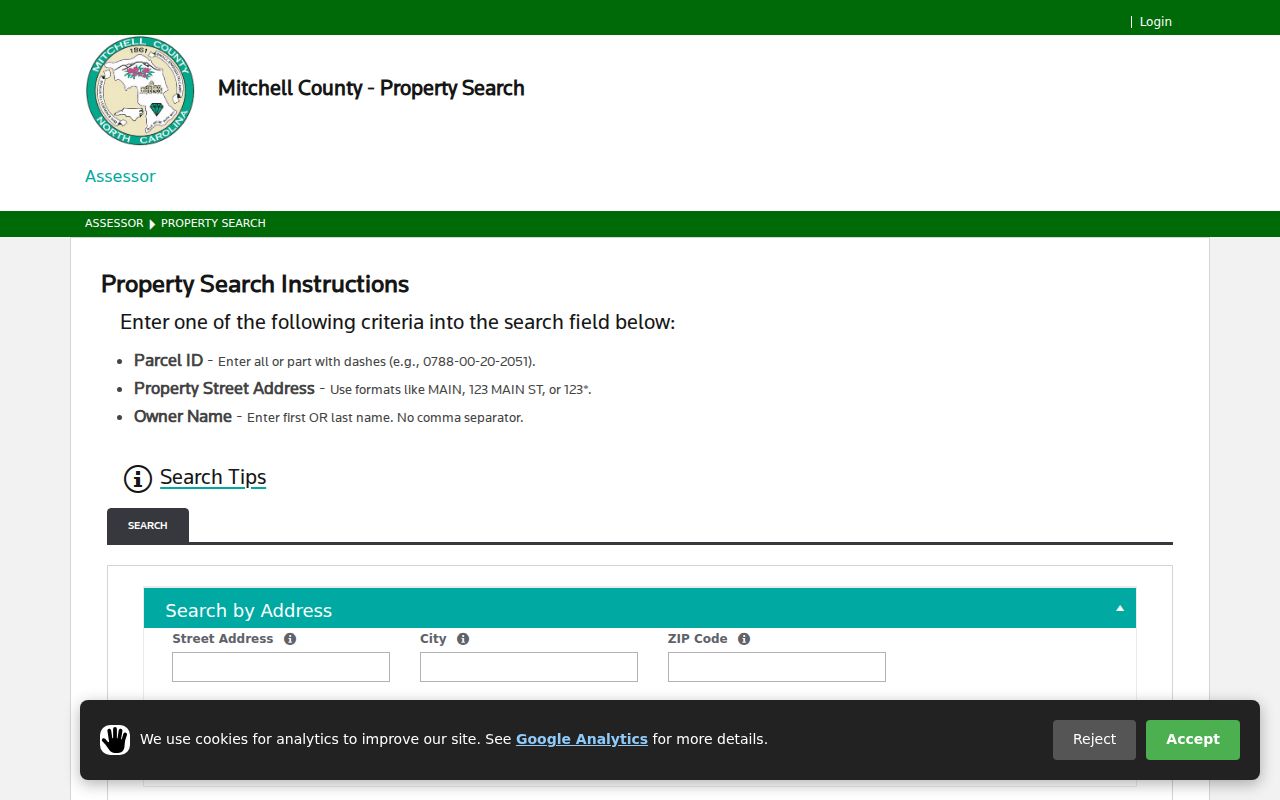
The parcel ID bridges that result to deeds, plats, and tax maps.
Confirm Mitchell Ownership by Deed
Deeds and plats are recorded by the Mitchell County Clerk of Superior Court. The GSCCCA Real Estate Search holds the statewide index. Search the owner as grantee, limited to Mitchell. Check instrument type, filing date, book, page, and description.
Every county's transactions are online since January 1, 1999. Records from 1993 through 1998 are still being added, so Mitchell's older cutoff varies. A missing web hit points to the clerk's index or public terminal, not to a missing deed.
Sources Behind a Mitchell Owner Name
The assessor names the tax-roll owner. The deed index names the recorded grantee, business records clarify an entity, and probate may explain an estate transfer, yet none of them proves who occupies the address.
| Source | Owner Info It Gives | Access |
|---|---|---|
| Assessor tax roll | Owner or taxpayer tied to a parcel | Public assessor search |
| GSCCCA deed index | Latest grantee and instrument reference | Account or clerk access |
| Secretary of State | Entity status and registered agent | Public business search |
| Probate Court | Estate proceeding behind a transfer | Custodian request |
Taxpayer names can differ from deed grantees. An estate, trust, recent sale, or simple update lag explains most of the gaps. Base the answer on matched parcel and deed evidence.
Mitchell LLCs Trusts and Estates
An LLC or corporation goes into the Georgia Corporations Division database under its exact legal name. The registered agent is a contact, not the owner. Trust deeds rarely settle things either. A trust deed may name the trustee without naming any beneficiary. Mitchell Probate Court handles estates. The county publishes no public probate index. Use the court's custodian route when the trail stays cold.
Estates can surface through an executor, an administrator, heirs, or a later deed after probate.
- Owner of record
- The owner name carried in a public property record.
- Grantee
- The party receiving an interest in a deed.
- Registered agent
- The recipient of official papers for an entity.
- Trustee
- The party holding title under a trust.
Mitchell Mailing Fields Need Care
A tax-roll mailing address shows where notices go. It proves nothing about residence or occupancy. Georgia's Safe at Home program, launched July 1, 2026, can place a substitute address in public records for an eligible participant. Never try to reverse that address. Public access does not authorize tracking, intimidation, or exposing a protected home. Confirm who owns this property with the parcel ID, legal description, and deed instead.
When Mitchell Names Do Not Match
A name match is not an identity match. Two people share names. Owners use initials, deeds carry former surnames, and business suffixes muddy the results. Filter by party type, county, instrument, and date. The parcel and legal description decide which result belongs to the land.
Instrument date and filing date answer different questions. A deed filed after an assessor snapshot may not appear there yet. One deed can cover several tracts, so confirm this parcel appears in its description, and remember that an agent, executor, or manager may sign in a representative role without owning the land.
Mitchell Owner Access Beyond Web
The web is not the only door. When the assessor page fails, contact the Tax Assessors Office with an address or parcel ID and ask for the existing card or tax-map reference. Deed questions go to the Clerk of Superior Court. Bring the party name, dates, and book and page. The Georgia Open Records Act opens another route to nonexempt county records. Redaction, costs, and office procedure still apply. The act never requires a custom ownership report, so ask narrowly for an existing map, card, index entry, or image. For historical ownership, the Mitchell former-owner search follows the chain backward.
Mitchell FANS Is a Watch Tool
FANS is a watch tool, not a verdict. The GSCCCA Filing Activity Notification System can monitor future indexed or transmitted filings for property you own or are authorized to watch. An alert deserves a quick look at the instrument. It proves neither validity nor fraud. It also names no past owners. Under FANS terms, each alert lasts one year, and renewing the watch is separate from checking the actual deed. A suspicious instrument belongs with the recording clerk, law enforcement, and the Georgia Attorney General consumer channel. Preserve the book, page, notice, and alert. Never confront a named party over an automated notice.
Limits of a Mitchell Owner Search
An owner search has limits. It proves no occupancy, resolves no liens, fixes no boundary, and offers no title opinion. A tax roll can lag behind a deed. A filing may cover only part of a tract, so stop when the legal description does not match.
Lawful use. Ownership records support purchase diligence, estate work, and boundary questions. Never use owner data to stalk, harass, intimidate, or expose a protected address.