
Mitchell Current-Owner Record Card
The Mitchell assessor search accepts three look-up keys: Parcel ID, Property Street Address, and Owner Name. Field labels and refresh dates on the result card can change, so match the owner line against the current parcel details the county displays. Keep the owner of record beside the parcel number as evidence of the match.
| Owner or taxpayer | The name tied to the tax parcel |
|---|---|
| Mailing address | Where assessment or tax mail is directed |
| Situs address | The street location of the parcel |
| Parcel ID | The key used across map and tax records |
| Legal description | The land text used to match a deed |
| Update or tax year | The time context for the displayed card |
An owner-of-record name says who holds title. It says nothing about who lives there. Mailing addresses often turn out to be a post office box, a business office, or a home outside the county. The parcel number and legal description anchor the true ownership without guessing at occupancy.
Search the Mitchell Tax Roll
Start with a broad street search in the Mitchell tax roll. The assessor recommends dropping direction and street type. Do that if the full entry returns nothing. For owner lookups, type the surname first with no comma. Partial text works fine. Open a result only once its situs and parcel details line up. The official assessor interface sits at the county search source.
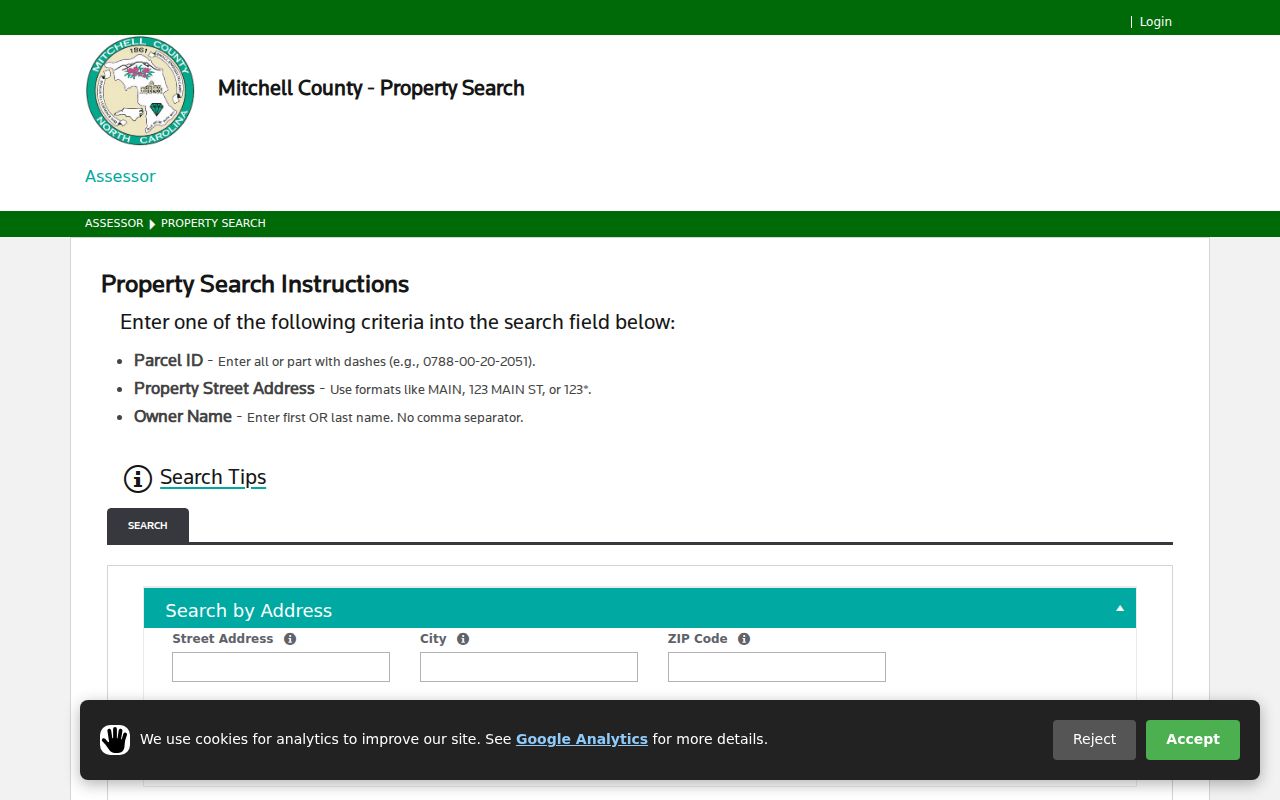
Those search modes only identify a candidate record. The latest deed supplies the present-tense confirmation of who owns it now.
Confirm Mitchell's Owner of Record
Set the tax card beside the newest conveyance in the GSCCCA Real Estate Search. The Mitchell County Clerk of Superior Court is the office that records the deed. Match the grantee, county, instrument type, filing date, book and page, and legal description across both documents.
- Capture the current owner line, parcel ID, legal description, and tax or update year.
- Search that owner as grantee in Mitchell County and locate the newest deed for the same tract.
- Compare instrument and recording dates with the assessor record's time context.
- For a company, verify the entity itself in the Georgia business search without treating its agent as owner.
- Owner of record
- The party currently carried by the public record.
- Vesting
- The way a deed places title in a person, trust, estate, or entity.
- Registered agent
- The official recipient for an entity, not the automatic owner of its land.
Mitchell Owner Updates Can Lag
The assessor maintains the tax roll, maps, annual notices, exemptions, and appeals. Deeds and assessment cards update on their own schedules, so the two can disagree. A recent grantee appears in GSCCCA. The tax card still carries the prior owner. Save both dates and ask the assessor about the current roll. GSCCCA's statewide coverage reaches back to at least 1999, and earlier years keep being added. Treat the newest filing with care too. An instrument might be corrective, partial, or security-related rather than a full transfer of title. Read the document type and the legal description before assuming anything. Note: A mismatch between the latest deed and the tax card is a prompt to check timing. It is not proof that either office erred.
Current Mitchell Entity Owners
The owner of record is sometimes an LLC or corporation. Confirm the exact legal name, status, former names, and registered agent through the Georgia business search. Neither the agent nor a company manager is the property owner. Don't recast them as one. An estate can stay on the roll while probate and a later deed remain pending. A trust may list only its trustee. Mitchell Probate Court handles estates, and it publishes no public local probate case index. The deed trail may call for a probate record. Ask the court or the clerk for the existing file.
Safe Addresses on Mitchell Records
Georgia Safe at Home began July 1, 2026. Participants who qualify receive a substitute address, mail forwarding, and protected voter registration. So a public tax mailing field may be a valid substitute address. It must never be reverse searched. The official Safe at Home page explains the program in full. The program changes how a public address should be read, not whether a deed and legal description can be checked through lawful custodian channels.
Mitchell Sale and Notice Timing
Georgia assessment notices list the parcel ID and fair market value. They also show assessed value, exemptions, and estimated tax. None of that proves current ownership. The notice year still helps when the assessor card and newest deed disagree. A deed filed after the roll was prepared may not appear on the card yet. Compare the recording date against each update date or tax year actually displayed. Never assume a refresh schedule. Ask the assessor whether the card reflects the deed. Estate, family, and entity transfers can carry a zero or nominal amount. So read the grantee, deed type, and land description together.
Evidence for a Mitchell Owner Check
A repeatable owner check preserves five things. These are the assessor owner field, parcel ID, situs and legal description, card year, and the newest matching deed reference. Save the access date as well. Those facts separate a genuine owner change from a similar name or a stale card. When an image is not online, save its GSCCCA citation. Request a copy from the clerk. Mitchell publishes no set copy fee, so ask the custodian for an estimate. FANS can alert an authorized owner to future indexed filings. It does not replace the deed check or supply a historical title search.
Mitchell Cities Share County Custody
A Camilla, Pelham, or Baconton street address may point to city permit or zoning files. The current owner field, though, stays a Mitchell County record. ZIP labels are just mailing context and can cross city limits. Carry the parcel number. It works at the city office. It also works with the assessor and the deed index. Permit forms name an applicant, contractor, or stated owner at the time of application. That historical form field never overrides the present tax card or deed. Use city records for the work history they document. Then return to the county property records for who owns the parcel today.
Contacting a Mitchell Current Owner
A public mailing address works well for a measured letter about a property matter. It proves nothing about where a person actually lives. Treat it as a way to send mail, not as consent to visit, follow, or share anyone's details, and route formal notices through an attorney or registered entity when the deed points that way.
Lawful use. Current-owner records support purchase, estate, tax, and boundary work. Never use them to harass, intimidate, or uncover a protected address.